
Training
What Is VO₂max?
What VO₂max is and why it matters for endurance performance.
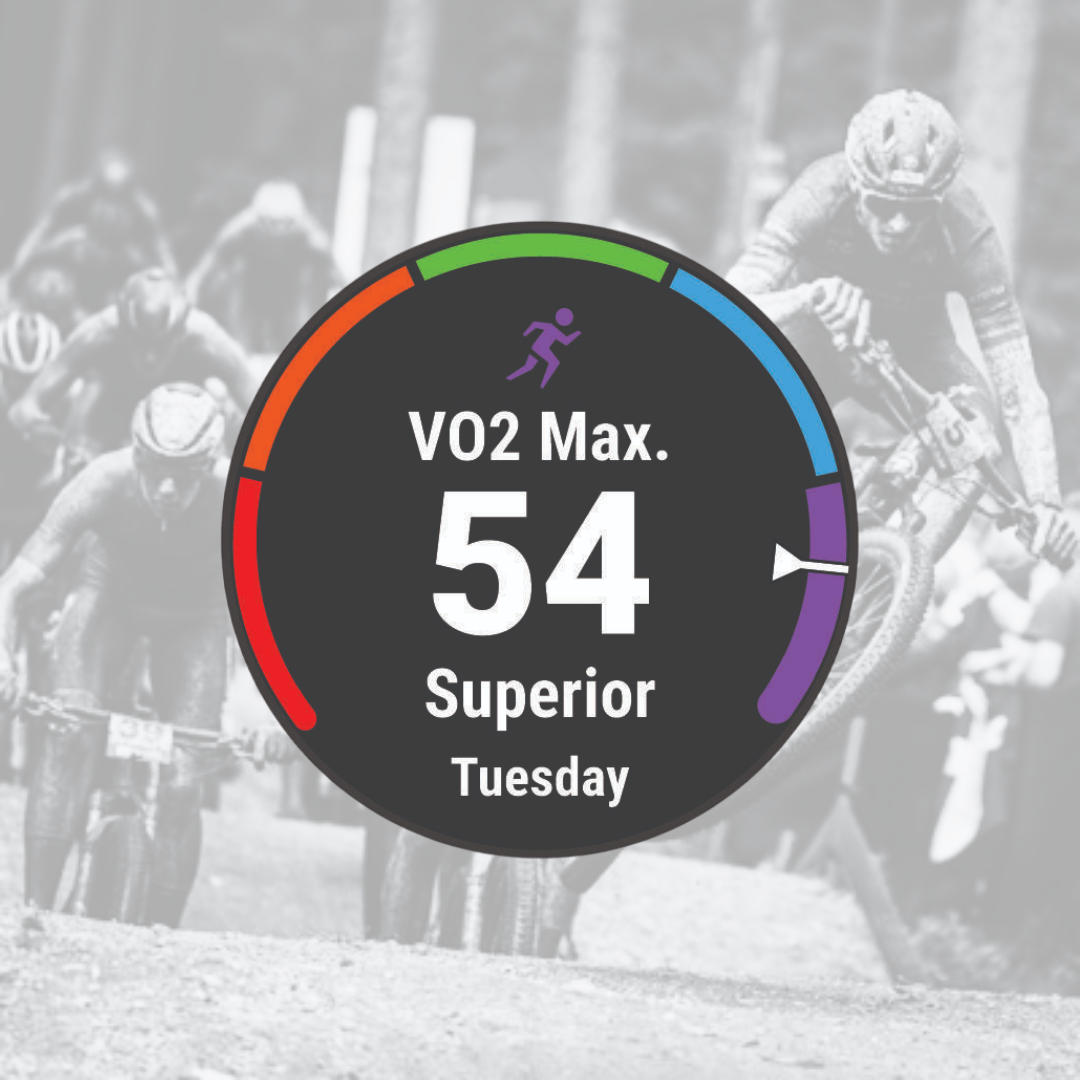
VO2max represents the maximum amount of oxygen that the body can use per minute during maximal exercise. It is an important indicator of cardiorespiratory or aerobic fitness. It is usually expressed relative to body mass as mL O2·kg-1·min-1, but it can also be expressed as an absolute value in L/min.
The term VO2max can be divided into two parts: VO2 refers to oxygen consumption, while max refers to the highest value achieved. Simply put, VO2max tells us how much oxygen the body is capable of using during intense exercise.
VO2max is particularly important in endurance sports, as it is an important indicator of aerobic capacity. However, VO2max alone is not the only factor that determines endurance performance. Other physiological and biomechanical factors also contribute to performance.
How Does the Body Deliver and Use Oxygen?
For muscles to produce energy aerobically during exercise, oxygen must first travel from the air to the muscle cells. Several different systems are involved in this process. The pathway of oxygen can be simplified as:
air → lungs → blood → heart and circulation → muscles → mitochondria
Oxygen is first inhaled into the lungs, where it passes from the alveoli into the blood. There, it is mostly bound to hemoglobin, a protein in red blood cells that transports oxygen throughout the body. The heart then pumps oxygen-rich blood to the muscles, while the circulatory system regulates how much blood is delivered to different tissues according to their needs.
As exercise intensity increases, the muscles require more energy, and therefore their demand for oxygen also increases. The body responds by increasing heart rate, cardiac output and blood flow to the active muscles. The amount of oxygen that the blood can carry is also important, with blood volume and hemoglobin concentration being key factors.
Once oxygen reaches the muscles, it must move from the blood into the muscle cells. There, it is primarily used by the mitochondria, where it contributes to the aerobic production of ATP (adenosine triphosphate), which provides energy for many cellular processes.
Looking at the entire pathway, it becomes clear that VO2max does not depend only on how much oxygen we can breathe in. What also matters is how effectively the body can take up oxygen, transport it to the muscles and use it there.
Why Is VO2max Important?
VO2max tells us about an individual's maximal aerobic capacity. In endurance sports, it is therefore an important indicator of aerobic fitness. A higher VO2max means that the body is capable of using more oxygen during maximal exercise.
This is particularly important in sports where performance relies heavily on the aerobic energy system. However, VO2max alone does not determine endurance performance. Two athletes with the same VO2max can achieve quite different results because performance is also influenced by other factors.
Important factors include lactate threshold, exercise economy or efficiency, and the ability to sustain a high fraction of VO2max during prolonged exercise. Therefore, endurance performance is not determined only by how much oxygen the body can maximally use, but also by how much of this capacity an athlete can sustain during prolonged exercise.
VO2max is therefore best understood as one important piece of the overall picture of endurance performance. In the following articles, I will look in more detail at how VO2max can be improved through training and how to structure VO2max intervals effectively.
References
- 1. Hawkins, M. N., Raven, P. B., Snell, P. G., Stray-Gundersen, J., & Levine, B. D. (2007). Maximal oxygen uptake as a parametric measure of cardiorespiratory capacity. Medicine & Science in Sports & Exercise, 39(1), 103–107. https://pubmed.ncbi.nlm.nih.gov/17218891/
- 2. Bassett, D. R., Jr., & Howley, E. T. (2000). Limiting factors for maximum oxygen uptake and determinants of endurance performance. Medicine & Science in Sports & Exercise, 32(1), 70–84. https://doi.org/10.1097/00005768-200001000-00012
- 3. Wagner, P. D. (2023). Determinants of maximal oxygen consumption. Journal of Muscle Research and Cell Motility, 44(2), 73–88. https://doi.org/10.1007/s10974-022-09636-y
- 4. Crystal, G. J., & Pagel, P. S. (2020). The physiology of oxygen transport by the cardiovascular system: Evolution of knowledge. Journal of Cardiothoracic and Vascular Anesthesia, 34(5), 1142–1151. https://doi.org/10.1053/j.jvca.2019.12.029
- 5. Joyner, M. J., & Coyle, E. F. (2008). Endurance exercise performance: The physiology of champions. The Journal of Physiology, 586(1), 35–44. https://doi.org/10.1113/jphysiol.2007.143834