
Sports Nutrition
How to Fuel During a Marathon
How to plan carbohydrate and fluid intake during a marathon.
During a marathon, the body gradually uses up its muscle and liver glycogen stores. Glycogen is an important source of energy for working muscles and helps maintain blood glucose levels. Because these stores are limited, taking in enough carbohydrates during the race helps maintain energy availability and running performance. A good fueling plan can also help delay fatigue and make it easier to hold your target pace.
1. How many carbohydrates do we need?
During a long run, the body uses both carbohydrates and fat for energy. Since glycogen stores are limited, carbohydrates taken during the marathon help support performance.
General guidelines for endurance exercise are:
30 to 60 g of carbohydrates per hour for exercise lasting around 1 to 2.5 hours.
Up to 90 g of carbohydrates per hour for exercise lasting longer than 2.5 hours, if this amount is well tolerated.
For higher intakes, it can help to combine different carbohydrate sources, such as glucose or maltodextrin and fructose. They use different transporters in the intestine, so combining them can increase total carbohydrate absorption and allow the body to take in more carbohydrates per hour.
Start fueling early and keep taking in carbohydrates throughout the race. This helps provide a steady supply of energy instead of waiting until you start to feel tired.
2. How much fluid do we need?
Fluid needs vary from person to person and depend mainly on sweat rate, temperature and running intensity. A rough starting point is 400 to 800 ml per hour, but the amount should be adjusted to the runner and the conditions. Avoid both excessive dehydration and drinking too much, as overdrinking can lead to hyponatremia, which means a dangerously low sodium level in the blood.
It is a good idea to take a gel with water or wash it down with water when the product instructions recommend it. This can help with digestion, especially when using concentrated gels.
3. Example fueling plan for a 3:15 marathon
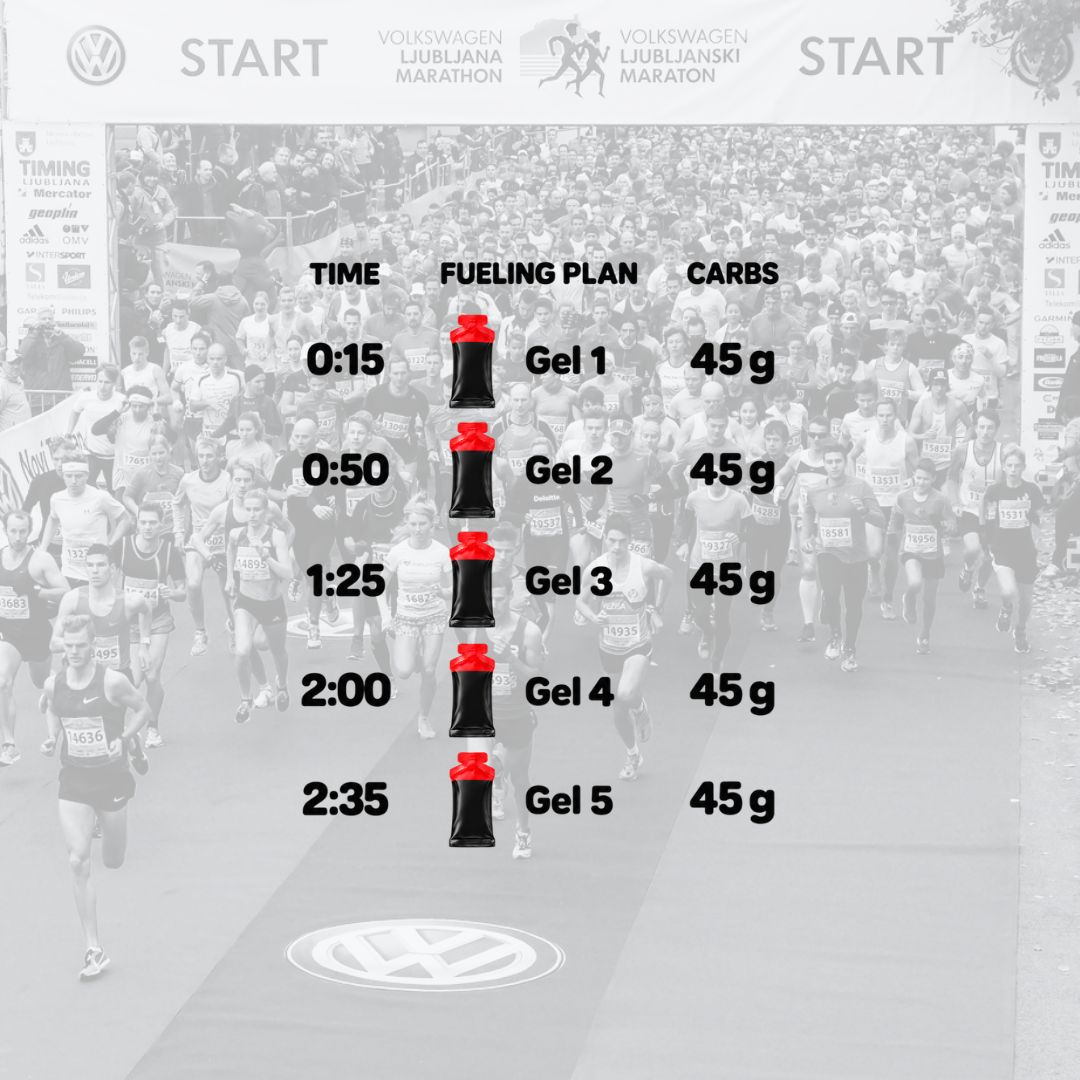
Here is an example of a runner aiming to finish a marathon in 3 hours and 15 minutes. The runner uses gels that contain 45 g of carbohydrates each and drinks plain water, which does not provide any extra carbohydrates.
The target is around 70 g of carbohydrates per hour because the runner knows this amount is well tolerated. Guidelines allow up to 90 g per hour for longer events, but taking in more is not always better if it causes stomach problems.
15 min — Gel 1: 45 g carbohydrates
50 min — Gel 2: 45 g carbohydrates
1 h 25 min — Gel 3: 45 g carbohydrates
2 h — Gel 4: 45 g carbohydrates
2 h 35 min — Gel 5: 45 g carbohydrates
In total, the runner takes in 225 g of carbohydrates, which averages about 69 g per hour. The gels are spaced around 35 minutes apart. Fluid intake is planned separately and adjusted to personal needs and the weather.
4. Common mistakes
Common mistakes include starting to fuel too late, trying a new strategy on race day, drinking too much, and ignoring the effects of weather and stomach comfort.
The key point: Plan your marathon fueling in advance and practise it during training. The right amount of carbohydrates, enough fluid and a strategy your stomach can handle can all help you have a better race.
References
- 1. Thomas, D. T., Erdman, K. A., & Burke, L. M. (2016). Position of the Academy of Nutrition and Dietetics, Dietitians of Canada, and the American College of Sports Medicine: Nutrition and Athletic Performance. Journal of the Academy of Nutrition and Dietetics, 116(3), 501–528. https://doi.org/10.1016/j.jand.2015.12.006
- 2. Jeukendrup, A. (2014). A Step Towards Personalized Sports Nutrition: Carbohydrate Intake During Exercise. Sports Medicine, 44(Suppl 1), 25–33. https://doi.org/10.1007/s40279-014-0148-z
- 3. Sawka, M. N., Burke, L. M., Eichner, E. R., Maughan, R. J., Montain, S. J., & Stachenfeld, N. S. (2007). American College of Sports Medicine position stand: Exercise and Fluid Replacement. Medicine & Science in Sports & Exercise, 39(2), 377–390. https://doi.org/10.1249/mss.0b013e31802ca597